
For when you want to include expenses that may lack an official invoice, this feature can be useful for seeing a more complete picture of where your financial performance is each month
These are useful for: recurring payments like rent, utilities, janitorial services, cable bills, marketing expenses, equipment- invoices where you don’t care about the line item detail, just the category.
Once created, you can:
- Immediately pay them using the Bill Pay module
- Automatically export them to accounting
- Optionally attach images or documents
- Enjoy a faster way to account for category-level costs to see overall performance in category reports like Budgets and your P&L
Article Contents
Step-by-Step Instructions
1. From Orders > Orders, Click on the "Add Invoice" button. From that dropdown, click on "Create Invoice".
2. From the box that pops up, click on the "One Time Invoice".
3. Select "Category-level detail" and click "Next".
What if I want "Line-item detail"? This will force a hold on the invoice and it won't be eligible for Bill Pay until an invoice image is uploaded.
However, if you are looking to create a "shell invoice" to pay immediately but that will still accommodate line-item details, click here for more information on that.
4. Start by choosing the Vendor. The dropdown list will show all of your existing vendors.
If you want to create an invoice for a vendor that is not in your account already, please send an email to help@marginedge.com to ask for a new vendor to be created - don't forget to tell us the new vendor's name!
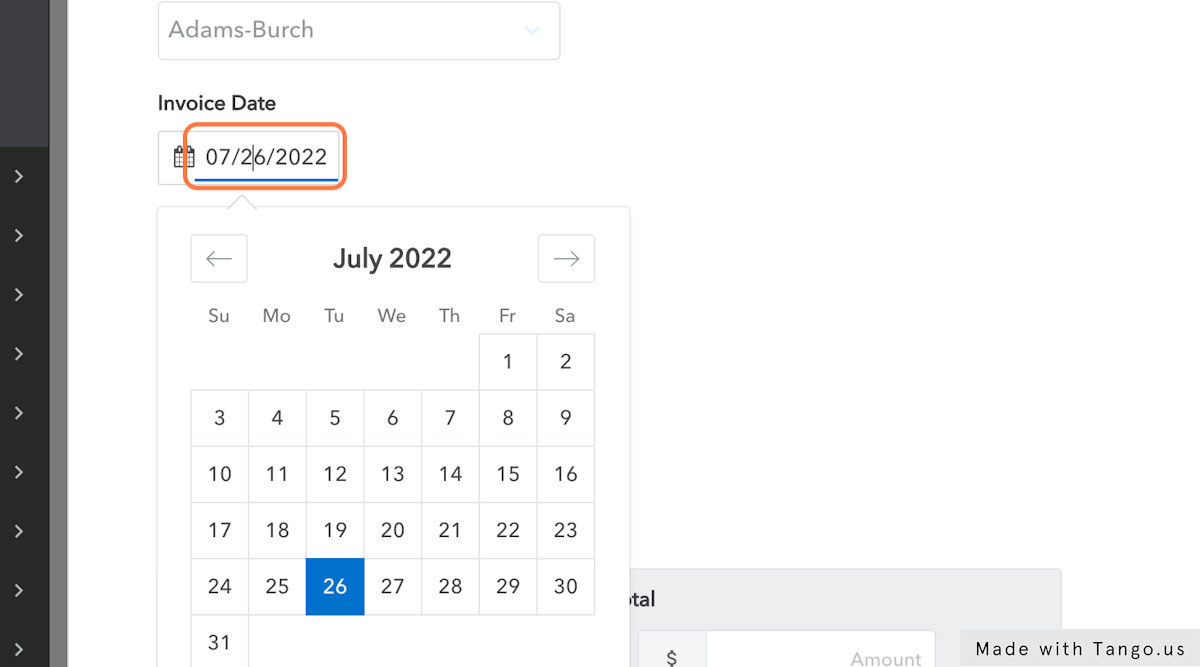
5. Choose an invoice date using the date selector.
The Invoice Number is optional; if you leave it blank we will populate it with the date of when the invoice was created.
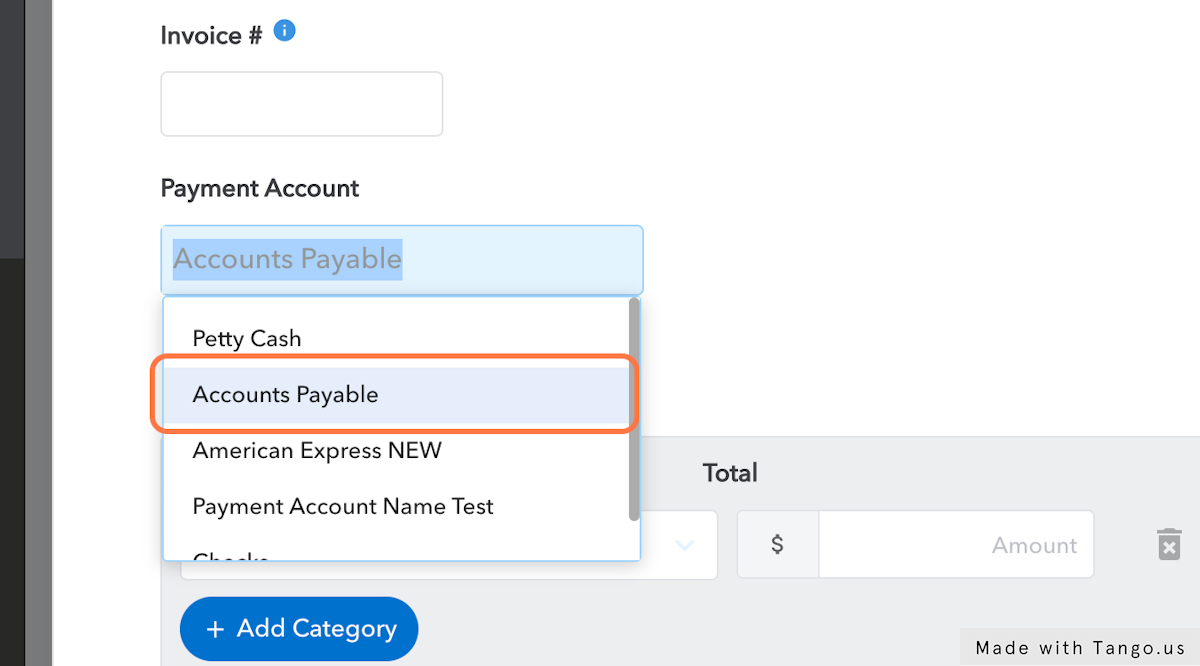
7. Next choose the Payment Account. The default is Accounts Payable, but you can choose any active Payment Account you desire.
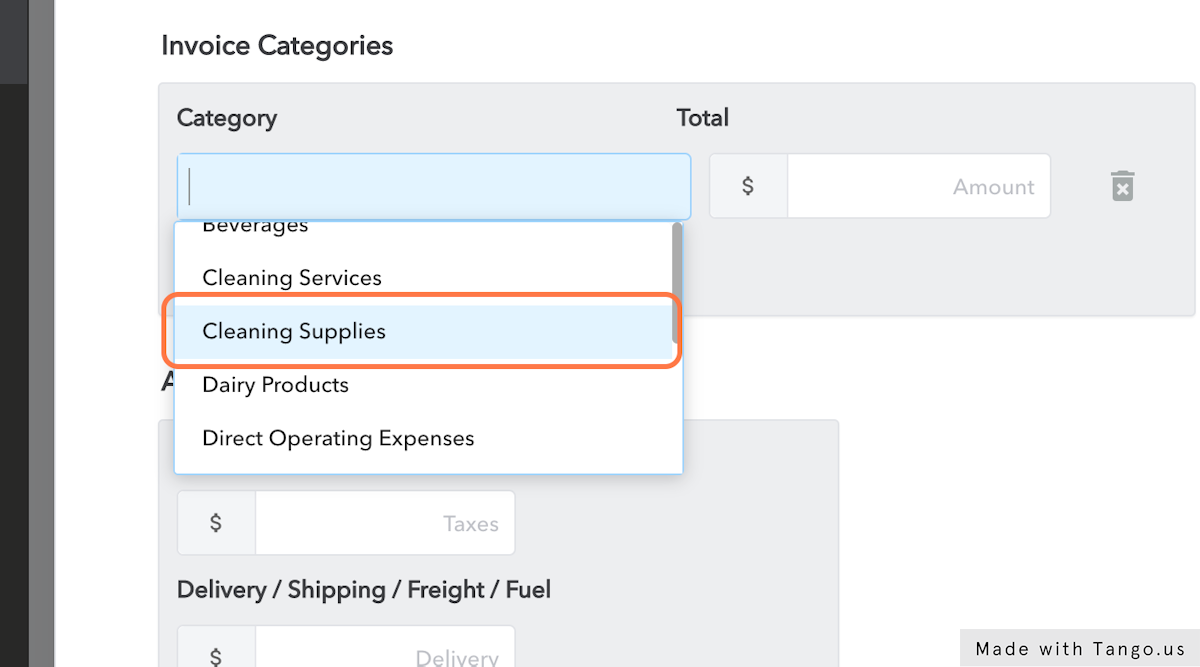
8. Choose the appropriate Category from the drop down list and fill in the corresponding amount. Remember, there are no vendor items or products on this invoice.
9. If there are any additional fees, taxes, charges you can enter those as well. We will automatically generate a total for you.
*Please note that invoices cannot be created with expenses for any Labor categories.

10. If you have any attachments you want to include, you can do that at the very bottom under Backup Documents by clicking "Attach file". You can include multiple documents here if desired. Once uploaded, the file name will show to provide you confirmation of success.
11. When you are finished, click "Create Invoice"!
It's now closed! It will populate through your reports and is available to pay in Bill Pay if desired.
How Category-level Invoices appear on usage-based reports
Since category-level invoices do not have line items, and therefore, do not have products, do these expenses still show up on usage-based reports like the Usage Report and the Theoretical Reports?
Yes, but let us explain. The expense will still be reflected at the category level as seen below, but may create a variance that could initially cause some confusion.
For the Usage Report, the expense is added to the Purchased Value and Used Value for that entire Category Type. You will see this reflected in the summary boxes at the top of the report, which show the overall Cost % for each category. As long as the category assigned is anything besides "Other", it will show up on your usage-based reports.
For the Actual vs. Theoretical, it will only be included in the Actual Cost:
Actual Cost: will include the category-level invoice.
Theoretical Cost: will only include products sold through your POS (PMIX mapping).
Result: The entire amount of the category-level invoice could show up as unexplained variance. It makes your "Actual" cost look higher than your "Theoretical" cost because the system knows you spent the money, but it doesn't know which sold items should have "used" that product. So just keep an eye out for this as a potential variance when reviewing category costs.
TL:DR If you see a large variance in a category that you can't explain by looking at individual products, check for category-level invoices. These are often used for credits, reimbursements, or miscellaneous expenses that aren't tracked by weight or count.